The False Dilemma Fallacy: How Conspiracy Theories Trap You into False Choices
When you encounter a conspiracy theory, you are often presented with a stark ultimatum: either the official story is a complete, deliberate lie, or the conspiracy narrative is the hidden truth.

The Socratic Paradox of Free Will: How Questioning Choice Strengthens Your Agency
Few questions haunt the human mind with more persistent intensity than the nature of free will.
The Anatomy of an Imposter Episode: Mapping the Hidden Lows After the High
The moment the email lands in your inbox—a promotion, a completed project, a speaking invitation—your stomach drops instead of soaring.
The Emotional Roots of Misinformation: Understanding Why Conspiracy Theories Stick
When we think about conspiracy theories and misinformation, the immediate instinct is to blame poor reasoning, lack of education, or a simple deficit of facts.
The Piltdown Man Hoax: How Scientific Doubt Corrected a Major Error
For decades, the Piltdown Man stood as one of the most celebrated fossils in the history of paleoanthropology, a supposed missing link between apes and humans that seemed to confirm prevailing...
The Doubt of Vulnerability: Navigating the Fear That Undermines True Connection
When we enter a relationship—whether romantic, familial, or platonic—we carry an invisible weight.
The Challenge of Religious Pluralism: Navigating Conflicting Truth Claims
The world is a mosaic of faiths, each offering a comprehensive narrative about the divine, the cosmos, and human purpose.
The Socratic Path Through the Doubt of Purpose
The question “Why am I here?” lingers in the quiet moments—between tasks, beneath sleep, at the edge of every success and every failure.

Lateral Reading: A Critical Skill for Navigating Conspiracy Theories in a Digital World
The internet has made information more accessible than ever, but it has also become a fertile ground for conspiracy theories.
The Fine Line Between Fear and Intuition: How Mislabeling Your Emotions Fuels Self-Doubt
Every day, you make hundreds of decisions, and each one is shadowed by a silent internal debate.

The Art of Collaborative Skepticism: Building Bonds Through Shared Inquiry
The solitary questioner often finds themselves chasing shadows, their doubts echoing in empty rooms where no one pushes back, no one refines the edges of their curiosity, no one offers the gift of a better question.
How to Model Healthy Skepticism When Your Child Questions Everything
The five-year-old looks up from her cereal bowl and asks, “But how do we know the sun will come up tomorrow?” It is a moment that can stop a parent cold.
How To Doubt A Vaccine: A Guide To Respecting Science Without Surrendering Skepticism
The impulse to question a vaccine recommendation is not a symptom of stupidity or malice.
The Base Rate Fallacy: Why We Overestimate the Likelihood of Rare Events
The human mind is not naturally wired for probability.
The Illusion of the Self: How Doubting Personal Identity Can Unlock Radical Freedom
The question “Who am I?” has haunted humanity for millennia, yet few of us pause to consider that the very act of asking it might be built on a fragile assumption.

The Doubt That Shattered the Spectacle: Lessons from the Situationist International
In the mid-twentieth century, a small group of radical artists, philosophers, and revolutionaries formed a collective that did something profoundly unsettling: they turned doubt into a weapon of mass awakening.
The Chemtrail Phenomenon: Where Healthy Skepticism Ends and Harmful Belief Begins
When you glance up at a clear blue sky and see a jet engine’s white plume spreading slowly into a hazy veil, your mind might flicker with a familiar question: is that normal condensation or something...

The Absurdity of Choice: Embracing Existential Doubt as a Path to Authenticity
Every human being wakes into a world that offers no instruction manual.
Letting Doubt Lead the Question: Raising Children Who Think Through Uncertainty
The first time your child asks “Why?” it feels like a small miracle of curiosity.
The Transformative Power of Doubt in Establishing Boundaries with Critical Partners
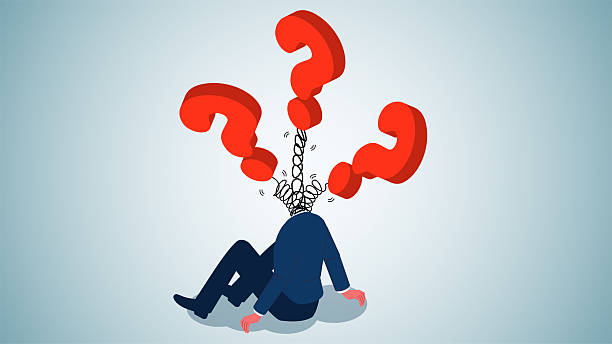
Doubt often arrives as an unwelcome guest in relationships, especially when we are faced with a partner, friend, or family member who seems perpetually critical.

Mindful Noting: A Practice to Disarm Your Inner Critic
The inner critic is not a villain; it is a frightened guardian.

The Replication Crisis: How Failed Reproductions Forge Better Science
In the mid-2000s, a quiet tremor began shaking the foundations of psychology, biomedicine, and economics.

The Alchemy of Skepticism: Transforming External Doubt into Unstoppable Drive
Every underdog has heard the same whispered refrain long before they ever step onto the stage.
How to Select Texts That Challenge Your Deepest Assumptions
Building a healthy identity as a questioner requires more than simply asking better questions; it demands active curation of the intellectual soil in which those questions take root.