
Skip to Content

All Articles

The Gift of “I Don’t Know”: Teaching Children to Embrace Uncertainty

The Gift of “I Don’t Know”: Teaching Children to Embrace Uncertainty

In a world that rewards quick answers and confident certainty, the simple phrase “I don’t know” has become almost taboo among adults, yet it may be the most powerful tool we can offer our children.

The Silent Distinction: Recognizing When Your Gut is Guiding Versus Undermining You

The Silent Distinction: Recognizing When Your Gut is Guiding Versus Undermining You

The human mind operates in a constant, often invisible dialogue with itself.
The Mental Filter: How Focusing on the Negative Fuels Self-Doubt

The Mental Filter: How Focusing on the Negative Fuels Self-Doubt

Imagine you receive ten compliments on a presentation and one piece of constructive criticism.
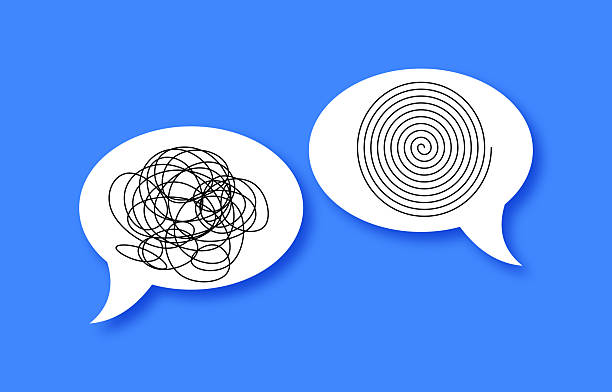
The Power of the Incomplete Sentence in Intimate Conversations

The Power of the Incomplete Sentence in Intimate Conversations

There is a specific moment in every close relationship when doubt arrives not as a roar, but as a whisper.
The Art of Holding Both: Integrating Skepticism and Intuition

The Art of Holding Both: Integrating Skepticism and Intuition

Doubt is not a single voice.
Why Are There So Many Different Beliefs?

Why Are There So Many Different Beliefs?

When a child looks up and asks why some families pray to different gods, or why a neighbor celebrates holidays that seem strange, or why a friend’s family does not believe in anything at all, the...

The Art of the Counter-Script: Affirmations That Rewire Your Inner Critic

The Art of the Counter-Script: Affirmations That Rewire Your Inner Critic

Your inner critic is not your enemy.

The Pre-Mortem Paradox: How Imagining Failure Builds Unshakeable Confidence

The Pre-Mortem Paradox: How Imagining Failure Builds Unshakeable Confidence

The underdog faces a peculiar uphill battle.

The Synergy of Skepticism and Intuition: A Pathway to Integrated Questioning

The Synergy of Skepticism and Intuition: A Pathway to Integrated Questioning

The quiet conflict between the skeptic and the intuitive self is one of the most overlooked tensions in the journey of a questioner.

The Strategic Value of Imposter Syndrome: Using Your Doubt as a Career Lever

The Strategic Value of Imposter Syndrome: Using Your Doubt as a Career Lever

In the competitive landscape of modern careers, few internal experiences feel as paralyzing as the creeping suspicion that you are about to be exposed as a fraud.

The Absurdity of Daily Routines: Finding Meaning in the Meaningless

The Absurdity of Daily Routines: Finding Meaning in the Meaningless

The alarm clock screams at the same time every morning.
The Dance of Knowing: When Skepticism Meets Inner Wisdom

The Dance of Knowing: When Skepticism Meets Inner Wisdom

The human mind is a strange and beautiful paradox.

The Underdog’s Paradox: How Embracing Pressure Turns Doubt into Momentum

The Underdog’s Paradox: How Embracing Pressure Turns Doubt into Momentum

The noise of the crowd fades into a single, thrumming heartbeat.

The Quiet Tyranny of Agreement: Using Doubt to Escape Groupthink in Social Circles

The Quiet Tyranny of Agreement: Using Doubt to Escape Groupthink in Social Circles

The pressure to agree is often invisible, a force that feels less like coercion and more like gravity.

The Imprint of Conditional Love: How Childhood Approval Seeking Breeds Self-Doubt

The Imprint of Conditional Love: How Childhood Approval Seeking Breeds Self-Doubt

The human psyche is a landscape shaped by early winds, some gentle and some severe.

The Doubt of Purpose: Using Socratic Questioning to Examine Life’s Meaning

The Doubt of Purpose: Using Socratic Questioning to Examine Life’s Meaning

The question of whether our lives have any inherent purpose can strike with the force of a falling star—sudden, blinding, and capable of leaving a crater in our sense of self.
Channeling External Doubt: The 2004 Red Sox and the Lesson of Underdog Motivation

Channeling External Doubt: The 2004 Red Sox and the Lesson of Underdog Motivation

When the 2004 Boston Red Sox walked off the field after Game 3 of the American League Championship Series, they had just been demolished 19–8 by their archrival New York Yankees.

The Crucible of Contradiction: When Feedback Challenges Your Self-Image

The Crucible of Contradiction: When Feedback Challenges Your Self-Image

There is a particular kind of doubt that arrives not from external ambiguity, but from a collision between two internal maps.

The Critical Difference Between Fear, Intuition, and Self-Doubt – And Why It Matters

The Critical Difference Between Fear, Intuition, and Self-Doubt – And Why It Matters

In the quiet moments before a major decision, a strange cocktail of sensations rises from the chest.

The Skepticism of Michel de Montaigne: How Radical Doubt Can Foster Self-Knowledge and Unshakeable Confidence

The Skepticism of Michel de Montaigne: How Radical Doubt Can Foster Self-Knowledge and Unshakeable Confidence

In the turbulent landscape of the sixteenth century, when religious wars tore Europe apart and ancient certainties crumbled, a French nobleman retreated to his tower library and began a project that...

The Paradox of Vulnerability: How Doubt Deepens True Connection

The Paradox of Vulnerability: How Doubt Deepens True Connection

To offer vulnerability is to step onto a stage where the spotlight might reveal not your strength but your frailty.

The Art of Collecting Micro-Wins: How Small Successes Quiet the Inner Critic

The Art of Collecting Micro-Wins: How Small Successes Quiet the Inner Critic

The inner critic rarely announces itself with a trumpet blast.

Embracing the Liminal Space: Doubt as a Sacred Threshold

Embracing the Liminal Space: Doubt as a Sacred Threshold

For the believer who has begun the arduous process of deconstruction, the landscape can feel like a vast, featureless desert.

Seeds of Doubt

Why do people doubt established scientific consensus?

Doubt in consensus can stem from cognitive biases like the Dunning-Kruger effect, where low expertise fuels overconfidence in contrarian views. It may also arise from a distrust in institutions, a desire for simple narratives in a complex world, or identity-protective cognition—where rejecting facts feels like defending a social group. Understanding this helps separate genuine scientific curiosity from ideologically motivated rejection, allowing for more productive conversations about evidence and methodology.

Is it wrong to cut people off for being doubtful?

It is not wrong to protect your mental and emotional space. Cutting off is a last resort for persistent toxicity, not a first response to simple doubt. First, set clear boundaries. If someone repeatedly disrespects those boundaries with criticism that feels abusive or sabotaging, then limiting or ending contact is an act of self-care. You are not obligated to entertain every opinion, especially those that harm your progress. Empowering yourself sometimes means choosing a supportive environment over constant conflict.

How should I engage with a loved one lost in destructive doubt?

Prioritize empathy and connection over correction. Argument often entrenches positions. Instead, ask curious, non-confrontational questions: “What first got you interested in that idea?“ or “What would it mean to you if that weren’t true?“ Listen to understand the underlying need—for safety, control, or community. Share your own feelings and values rather than facts. Model critical thinking gently by exploring sources together. The goal is not to “win” but to maintain a bridge, showing that your relationship is stronger than the disagreement.

What’s the difference between doubting a conspiracy theory and doubting mainstream science?

Doubting a conspiracy theory often involves questioning a lack of credible, verifiable evidence and rejecting claims built on secrecy and ad-hoc reasoning. Doubting mainstream science, when done constructively, involves engaging with the abundance of peer-reviewed, reproducible evidence and methodological rigor. The distortion occurs when both are dismissed with equal, blanket suspicion—this is false equivalence. Healthy doubt respects evidence hierarchies and is proportional to the strength and consensus of the available data.

How does emotional reasoning override factual analysis for doubters?

For many, the belief begins with a strong emotion—fear, anger, betrayal. The conspiracy theory then provides a narrative that explains and justifies that emotion. Once emotionally invested, the mind seeks information that confirms the feeling (confirmation bias) and rejects what doesn’t. The emotional truth (“I feel this is wrong”) becomes more valid than factual truth. The narrative feels right because it aligns with their underlying emotional state, making pure data feel cold and irrelevant.