Skip to Content

All Articles

The Origins of the All-or-Nothing Mindset

The Origins of the All-or-Nothing Mindset

Perfectionism does not arrive fully formed in adulthood like a sudden storm.

The Power of Vulnerability in Defeating Workplace Imposter Syndrome

The Power of Vulnerability in Defeating Workplace Imposter Syndrome

Imposter syndrome thrives in silence.

The Neuroscience of Self-Doubt: Why a Proof File Rewires Your Brain

The Neuroscience of Self-Doubt: Why a Proof File Rewires Your Brain

Your inner critic does not speak from truth.

Pressure as Privilege: The Underdog’s Secret Weapon Against Self-Doubt

Pressure as Privilege: The Underdog’s Secret Weapon Against Self-Doubt

Every athlete who has ever stepped onto a championship court knows the moment.

The Comparison Trap: How Social Comparison Activates Self-Doubt

The Comparison Trap: How Social Comparison Activates Self-Doubt

You scroll through your feed and see a former classmate’s promotion announcement, a friend’s vacation photos, or a colleague’s award.
The Socratic Method as a Tool for Radical Self-Inquiry

The Socratic Method as a Tool for Radical Self-Inquiry

The ancient Greek philosopher Socrates famously declared that the unexamined life is not worth living.

Reframing Failure as Data: A Self-Compassion Exercise

Reframing Failure as Data: A Self-Compassion Exercise

The inner critic has a favorite story to tell when you stumble: you are not enough.
The False Flag Framework: Deconstructing a Conspiracy Theory’s Appeal and Logic

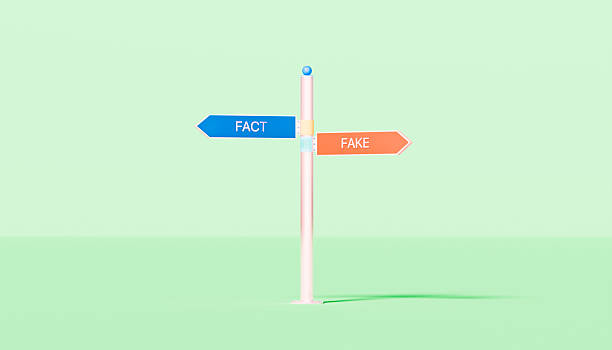
The False Flag Framework: Deconstructing a Conspiracy Theory’s Appeal and Logic

Among the most persistent and emotionally charged conspiracy theory frameworks in modern discourse is the “false flag” narrative.
The Power of Doubt: How the 1960s Counterculture Questioned Everything and Found Themselves

The Power of Doubt: How the 1960s Counterculture Questioned Everything and Found Themselves

In the middle of the twentieth century, a generation raised on postwar prosperity and Cold War anxiety began to suspect that the world they inherited was built on shaky foundations.
Questioning Religious Authority While Honoring Ancestral Practices

Questioning Religious Authority While Honoring Ancestral Practices

The tension between inherited tradition and personal spiritual inquiry often feels like a choice between loyalty and authenticity.
The Paradox of Freedom in Existentialism: Why Choice Creates Doubt

The Paradox of Freedom in Existentialism: Why Choice Creates Doubt

Existentialism offers one of the most profound yet unsettling gifts to the human psyche: the absolute freedom to define oneself.

The False Dilemma Fallacy in Conspiracy Narratives: How Either-Or Thinking Distorts Reality

The False Dilemma Fallacy in Conspiracy Narratives: How Either-Or Thinking Distorts Reality

Conspiracy theories thrive on simplification.

The Paradox of Certainty: How Expressing Doubt Can Strengthen Your Professional Credibility

The Paradox of Certainty: How Expressing Doubt Can Strengthen Your Professional Credibility

In the high-stakes theater of the modern workplace, the unspoken rule has long been clear: project confidence at all costs.
The Imposter Syndrome Timeline: Mapping Your Earliest Doubt Episodes

The Imposter Syndrome Timeline: Mapping Your Earliest Doubt Episodes

Every imposter syndrome narrative begins with a single moment.

The Hiddenness of God: An Intellectual Doubt That Deepens Faith

The Hiddenness of God: An Intellectual Doubt That Deepens Faith

For many believers and seekers, one of the most persistent intellectual doubts about religious faith is the problem of divine hiddenness.

The Singular Solution: Why Conspiracy Theories Thrive on the Illusion of a Simple Explanation

The Singular Solution: Why Conspiracy Theories Thrive on the Illusion of a Simple Explanation

When a plane disappears over the ocean, when a pandemic reshapes global economies, or when a beloved public figure dies in a strange accident, the human mind recoils from the chaos.

The Paradox of Certainty: How Leading with Doubt Strengthens Your Team

The Paradox of Certainty: How Leading with Doubt Strengthens Your Team

The conventional image of a confident leader is one of unwavering certainty: a person who always knows the right answer, never second-guesses a decision, and projects an aura of infallible direction.

The Fallacy of False Balance: Why Giving Equal Weight to Unsupported Claims Misrepresents Science

The Fallacy of False Balance: Why Giving Equal Weight to Unsupported Claims Misrepresents Science

In an age where information flows faster than ever, a well-intentioned but deeply flawed journalistic habit has seeped into public discourse: false balance.

The Fellowship of the Uncertain: Building Community Through Shared Spiritual Doubt

The Fellowship of the Uncertain: Building Community Through Shared Spiritual Doubt

The spiritual questioner walks a lonely road.

Redefining Success: Why Underdogs Must Focus on the Process, Not the Prize

Redefining Success: Why Underdogs Must Focus on the Process, Not the Prize

Every underdog knows the sting of doubt.

The Socratic Method and the Doubt of Personal Identity

The Socratic Method and the Doubt of Personal Identity

Who am I? This question, deceptively simple, has haunted human consciousness for millennia.

Deconstructing the Secret Cabal Narrative: How Pattern-Seeking Fuels Conspiracy Belief

Deconstructing the Secret Cabal Narrative: How Pattern-Seeking Fuels Conspiracy Belief

At the heart of countless conspiracy theories lies a single, seductive framework: the idea that a small, hidden group of elites secretly controls world events.

The Art of Decisive Doubt: Navigating the Threshold Between Inquiry and Action

The Art of Decisive Doubt: Navigating the Threshold Between Inquiry and Action

Every questioner eventually faces a silent crisis: the moment when inquiry, once a nourishing habit, becomes a barrier to forward motion.
The Paradox of Free Will: Embracing Determinism as a Catalyst for Agency

The Paradox of Free Will: Embracing Determinism as a Catalyst for Agency

The question of whether we possess free will has haunted philosophers, scientists, and ordinary individuals for millennia.

Seeds of Doubt

Why is it so hard to be kind to myself when I make a mistake?

Society often conditions us to equate self-criticism with accountability and high standards. You might fear that self-kindness means letting yourself off the hook or becoming complacent. In reality, harshness triggers a threat response, hindering learning. Recognizing that imperfection is part of the universal human experience, not a personal failing, is the first step toward breaking this punitive cycle and fostering true resilience.

When is it time to disengage or distance myself?

Consider distancing if the relationship becomes abusive, the belief leads to harmful actions, or your mental health is severely impacted. Persistent engagement that damages your well-being isn’t required. You can love someone from a distance. Prioritize your safety and peace. Disengagement is not a failure; it’s a legitimate strategy of self-preservation when healthy boundaries cannot be maintained.

How can leaders use doubt to build stronger, more innovative teams?

Great leaders model “confident doubt.“ They openly say, “I don’t have all the answers; let’s figure this out together.“ This creates psychological safety, empowering team members to voice concerns and unconventional ideas without fear. By systematically doubting the status quo (“How can we improve this process?“), they foster a culture of continuous improvement and innovation. The leader’s role becomes curating the process of inquiry—channeling collective doubt into structured brainstorming, experimentation, and evidence-based decision-making, which builds team cohesion and drives superior results.

Why is it important to distinguish between doubt of fact and doubt of value?

Doubt of fact (“Is this statistic accurate?“) can often be resolved with evidence and data. Doubt of value (“Is this policy fair?“) involves personal and cultural principles. Confusing the two leads to fruitless arguments. When encountering doubt, first ask: “Is this a question of evidence or of priority?“ This clarity allows you to seek the right tools—research for facts, dialogue and reflection for values—making the path to resolution much clearer.

How can I navigate doubt when my personal experience contradicts my beliefs?

This experiential crisis is a pivotal moment for growth. First, hold the tension without rushing to discard either your belief or your experience. Investigate both with curiosity: Is your belief system broad enough to encompass this new data? Can your experience be interpreted in a different light? This process isn’t about “winning,“ but about deepening your understanding. Such dissonance can lead to a more nuanced, resilient, and personally authentic faith or worldview, moving from inherited ideas to a conviction tested by life.