
The Roots of Self-Doubt: How Early Childhood Shapes Our Inner Critic
The persistent whisper of self-doubt, that internal critic questioning our worth and capabilities, rarely emerges in a vacuum.

How to Stop Mind-Reading and Overcome the Fear of Being Doubted
The persistent feeling that others are doubting you—your abilities, your intentions, or your worth—is a heavy burden to carry.
Building Unshakable Confidence: How to Prevent Self-Doubt from Undermining Your Team’s Trust
Self-doubt is a universal human experience, a quiet whisper questioning our decisions and capabilities.

The Anxiety of the Abyss: Why We Fear Existential Doubt
Existential doubt, that unsettling confrontation with life’s biggest questions, is a universal human experience.

Navigating the Shadows: A Compassionate Approach to Destructive Doubt
Witnessing a loved one consumed by destructive doubt is a uniquely painful experience.

The Roots of Our Reluctance: Understanding Guilt When Questioning Authority
The feeling of guilt that arises when we privately doubt a mainstream narrative or challenge an authoritative figure is a profound and nearly universal human experience.

Knowing When to Walk Away: The Necessity of Redirecting or Disengaging from a Doubter
In any earnest pursuit of knowledge, progress, or change, encountering doubt is inevitable.
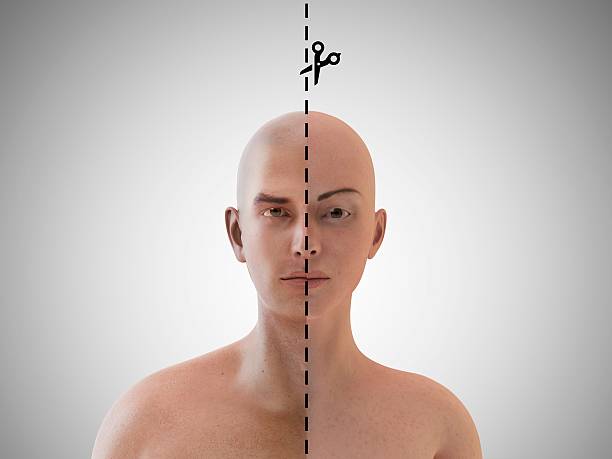
Healthy Skepticism vs. Cynical Disbelief: A Crucial Distinction
In an age saturated with information and misinformation, the ability to question is more vital than ever.
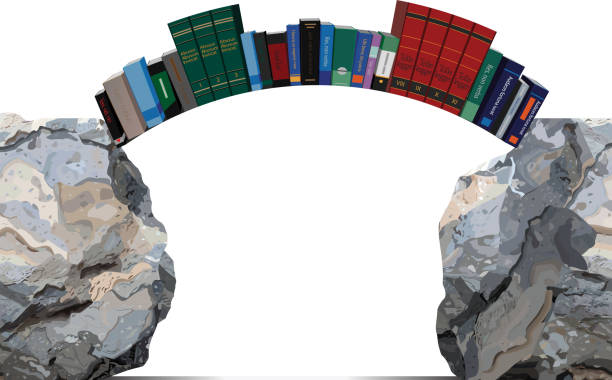
A Guide to Navigating the Modern Misinformation Landscape
In an age where information flows faster than our ability to verify it, protecting oneself from misinformation has become a critical life skill, akin to digital literacy.


How Feelings Fuel False Beliefs: The Emotional Engine of Misinformation
In the digital age, misinformation spreads with alarming speed and tenacity, often outpacing factual corrections.

The Confident Doubter: How the Dunning-Kruger Effect Skews Skepticism
The Dunning-Kruger effect, a cognitive bias where people with low ability at a task overestimate their competence, is often discussed in the context of the arrogantly ignorant.

Recognizing the Hallmarks of a Flawed or Deceptive Study
In an age saturated with information, the ability to critically evaluate scientific research is an essential skill.

The Vicious Cycle of Perfectionism and Imposter Syndrome
The relentless pursuit of flawlessness and the gnawing fear of being exposed as a fraud are two sides of the same debilitating coin.

Knowing When Doubt in a Relationship Requires Professional Guidance
Doubt is a natural, even healthy, component of any long-term romantic partnership.

The Deceptive Art of Cherry-Picking Data: How Selective Evidence Shapes False Narratives
In an age saturated with information, the ability to present data is synonymous with authority.

Is Expressing Doubt in a Meeting a Sign of Unprofessionalism?
The modern workplace often prizes confidence and decisiveness, creating an environment where expressing doubt can feel like a career-limiting move.

Modeling Productive Doubt: A Guide for Parents and Educators
In a world that often prizes certainty and swift answers, the concept of doubt can seem like a weakness, a hesitation to be overcome.

Does Religious Diversity Disprove Any Single Faith?
The sheer variety of world religions, each with its own distinct cosmology, ethics, and claims to truth, can feel like a powerful argument against the validity of any one tradition.

How Doubt Can Forge Stronger Personal Values and Ethics
We often view doubt as a weakness, a corrosive force that undermines our convictions and leaves us adrift in a sea of uncertainty.

Discerning Wisdom from Noise: How to Evaluate a Doubter’s Criticism
In a world saturated with opinions, the chorus of doubters can be both a valuable corrective and a paralyzing distraction.
The Psychology Behind Clinging to Beliefs Against All Evidence
The human mind is not a purely logical machine, but a complex organ shaped by evolution, emotion, and social necessity.
Shielding Your Self-Worth from the Impact of Doubting Comments
In the chorus of daily life, doubting comments can arrive like discordant notes, threatening to disrupt the melody of our self-perception.
How Skeptical Audiences Can Sharpen Your Communication Skills
In the pursuit of effective communication, we often gravitate toward agreeable audiences—those who nod along, smile encouragingly, and readily accept our message.