Skip to Content

Building a Healthy Identity as a Questioner

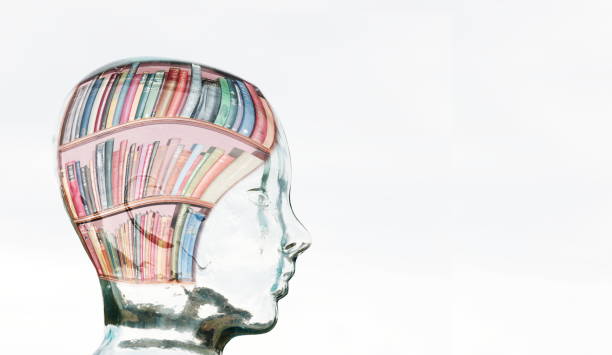
The Doubt Library: Selecting Sources That Challenge Your Assumptions

The Doubt Library: Selecting Sources That Challenge Your Assumptions

To build a healthy identity as a questioner, you must treat doubt not as a deficiency but as a muscle, a lens, a compass.

Harmonizing Skepticism and Intuition: The Path to Balanced Wisdom

Harmonizing Skepticism and Intuition: The Path to Balanced Wisdom

In our modern world, we are frequently encouraged to choose a side: either embrace the cold, hard logic of skepticism or surrender to the flow of intuitive knowing.

The Art of Collaborative Skepticism: Building Bonds Through Shared Inquiry

The Art of Collaborative Skepticism: Building Bonds Through Shared Inquiry

The solitary questioner often finds themselves chasing shadows, their doubts echoing in empty rooms where no one pushes back, no one refines the edges of their curiosity, no one offers the gift of a better question.

How to Select Texts That Challenge Your Deepest Assumptions

How to Select Texts That Challenge Your Deepest Assumptions

Building a healthy identity as a questioner requires more than simply asking better questions; it demands active curation of the intellectual soil in which those questions take root.

The Power of Shared Vulnerability in Questioner Communities

The Power of Shared Vulnerability in Questioner Communities

To build a healthy identity as a questioner, you must first accept that doubt is not a solitary affliction but a universal human experience.

The Paradox of Certainty: Balancing Skeptical Inquiry with Intuitive Wisdom

The Paradox of Certainty: Balancing Skeptical Inquiry with Intuitive Wisdom

The human mind is a battlefield where two ancient generals wage a quiet war.
The Threshold of Certainty: When Doubt Serves and When It Stalls

The Threshold of Certainty: When Doubt Serves and When It Stalls

The life of a questioner is a delicate dance between open inquiry and decisive action.

Why Shared Doubt Creates Stronger Bonds Than Shared Certainty

Why Shared Doubt Creates Stronger Bonds Than Shared Certainty

The instinct to seek belonging is as human as the instinct to question.
The Art of Constructive Disagreement: Why True Questioners Thrive on Conflict

The Art of Constructive Disagreement: Why True Questioners Thrive on Conflict

At first glance, the phrase “finding your community of fellow questioners” might conjure images of a peaceful circle of nodding heads, all murmuring in agreement about the virtue of doubt.

The Threshold of Sufficient Doubt: Knowing When Inquiry Must Yield to Action

The Threshold of Sufficient Doubt: Knowing When Inquiry Must Yield to Action

Doubt is often framed as an enemy of progress, a quicksand that swallows momentum and leaves the mind spinning in endless loops.

The Decisive Questioner: Knowing When to Act

The Decisive Questioner: Knowing When to Act

Doubt is the engine of inquiry, the force that pushes us beyond comfortable assumptions into deeper understanding.

The Courage to Be Challenged: Creating a Culture of Mutual Inquiry

The Courage to Be Challenged: Creating a Culture of Mutual Inquiry

The most dangerous question a person can ask is not the one that shakes a long-held belief, but the one that quietly whispers, “Who else is brave enough to ask this with me?” Finding a community of...

Seeds of Doubt

How can I use doubt to build unshakeable confidence?

True confidence is built on tested foundations, not unchallenged beliefs. By rigorously doubting and investigating your views, you replace blind faith with earned understanding. Each time you navigate doubt, you prove your resilience and capability to yourself. This process creates an internal confidence that external criticism cannot easily shake, because you know your positions are considered, not just inherited. Doubt becomes the fire that forges strength.

How Do I Handle External Doubters While Staying True to My Decision?

Acknowledge their perspective without internalizing it as truth. Thank them for their concern, then critically assess if their doubt reveals a genuine blind spot you missed. If it does, integrate that insight. If it doesn’t, confidently proceed. Your mission isn’t to convince every doubter but to make informed, resilient decisions. Establish clear boundaries—“I’ve considered that angle and am moving forward.“ External doubt becomes fuel when you use it to stress-test your plan, strengthening your resolve and preparation rather than derailing your confidence.

How can I build confidence when doubt feels overwhelming?

Action is the antidote to paralyzing doubt. Break tasks into micro-actions so small that doubt can’t grab hold—just take the first tiny step. Create a “proof file” of past successes to counter the brain’s negativity bias. Practice self-compassion; talk to yourself as you would a struggling friend. Confidence is built through repeated evidence of competence, not by waiting for doubt to disappear. Each small action provides data that contradicts the doubt’s narrative.

What is the core difference between healthy skepticism and corrosive doubt?

Healthy skepticism is a tool for inquiry, asking “What is the evidence?“ to move closer to truth. Corrosive doubt is a state of paralysis, a repetitive “I can’t” or “It’s all wrong” that blocks action. The key difference is direction: skepticism is outwardly focused, testing ideas to build understanding, while corrosive doubt is often inwardly focused, eroding self-trust and agency. One is a methodology; the other is a mindset that can trap you in inaction.

How do I maintain my own beliefs without becoming dogmatic?

Treat your beliefs as working hypotheses, not permanent possessions. Regularly stress-test them by seeking out credible, contrary perspectives. Ask yourself, “Under what conditions could this belief be wrong?“ This prevents fossilization. A living belief system can withstand scrutiny and adapts to new evidence. The goal is not to have unchanging beliefs, but to have a reliable, updateable process for forming them—which is the essence of confidence.