Skip to Content

Philosophical and Existential Doubt Exploration

Doubt as a Virtue: Lessons from Montaigne’s Skepticism

Doubt as a Virtue: Lessons from Montaigne’s Skepticism

The sixteenth-century essayist Michel de Montaigne presents a radical alternative to the way we typically think about doubt.
The Socratic Method: A Philosophical Exercise for Radical Self-Inquiry

The Socratic Method: A Philosophical Exercise for Radical Self-Inquiry

Doubt, when approached with deliberate structure, becomes a scalpel for dissecting the very assumptions that underpin identity, belief, and purpose.
The Problem of the Criterion: How Ancient Skepticism Reveals the Trap of Certainty

The Problem of the Criterion: How Ancient Skepticism Reveals the Trap of Certainty

Every search for knowledge begins with a quiet, often unacknowledged question: How do I know that I know? This is not merely a pedantic exercise for cloistered philosophers.
The Brain in a Vat Hypothesis: Embracing Radical Skepticism to Forge Certainty

The Brain in a Vat Hypothesis: Embracing Radical Skepticism to Forge Certainty

Imagine you are nothing more than a brain floating in a vat of nutrients, connected to a supercomputer that feeds you every sensation, thought, and memory you have ever experienced.
The Illusion of the Self: How Buddhist Anatta Challenges Western Identity

The Illusion of the Self: How Buddhist Anatta Challenges Western Identity

The question of who we are lies at the heart of philosophical and existential doubt.
The Absurdity of Daily Routines: Finding Meaning in the Meaningless

The Absurdity of Daily Routines: Finding Meaning in the Meaningless

The alarm clock screams at the same time every morning.
The Doubt of Purpose: Using Socratic Questioning to Examine Life’s Meaning

The Doubt of Purpose: Using Socratic Questioning to Examine Life’s Meaning

The question of whether our lives have any inherent purpose can strike with the force of a falling star—sudden, blinding, and capable of leaving a crater in our sense of self.
The Absurd Hero: Finding Unshakeable Confidence in a Meaningless Universe

The Absurd Hero: Finding Unshakeable Confidence in a Meaningless Universe

The most profound doubt is not whether you are good enough, smart enough, or worthy of love.

The Practice of Epistemic Humility: Using Doubt to Unmask Core Beliefs

The Practice of Epistemic Humility: Using Doubt to Unmask Core Beliefs

Every person carries within them a hidden architecture of beliefs so deeply ingrained that they feel like the furniture of the world rather than choices we have made.
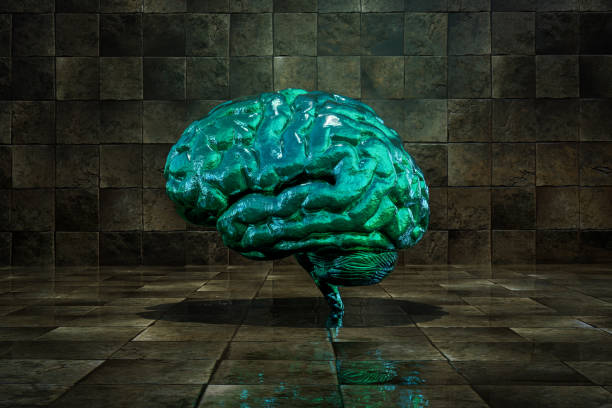
The Brain in a Vat: How Doubting Reality Becomes the Crucible of Certainty

The Brain in a Vat: How Doubting Reality Becomes the Crucible of Certainty

Imagine for a moment that you are not sitting where you are reading these words.

The Gift of the Existential Crisis: Doubt as the Engineer of Meaning

The Gift of the Existential Crisis: Doubt as the Engineer of Meaning

To wake up one morning and feel the floor drop out from beneath your life is not a sign of weakness.
The Exercise of Radical Skepticism: Using Doubt as a Tool for Self-Discovery

The Exercise of Radical Skepticism: Using Doubt as a Tool for Self-Discovery

To engage in radical self-inquiry is to take the sharpest knife of doubt and turn it inward, not to wound, but to dissect.

Seeds of Doubt

How can I navigate doubt when it feels overwhelming?

Anchor yourself in actionable steps. First, name the specific doubt—write it down to contain it. Second, distinguish between what you can control (your actions, responses) and what you cannot (others’ opinions, ultimate outcomes). Third, seek small, tangible evidence against the doubt’s narrative through experimentation. Finally, practice self-compassion; doubt is not a personal failure but a sign of a engaged mind. This process transforms a nebulous anxiety into a manageable series of inquiries, restoring agency.

Who are the most famous philosophical doubters and what did they believe?

René Descartes famously used radical doubt to find a foundational truth, concluding “I think, therefore I am.“ He doubted everything except his own existence as a thinking being. Similarly, ancient Skeptics like Pyrrho argued that we cannot know the true nature of reality, advocating for suspension of judgment to achieve mental tranquility. These thinkers demonstrate that systematic doubt is not an endpoint but a powerful tool to strip away assumptions and build more robust understanding, aligning with your journey to use doubt constructively.

How can doubting free will be empowering rather than discouraging?

Understanding that your choices are shaped by prior causes can foster self-compassion and reduce harsh self-blame for past actions. It shifts focus from judging a mythical “free self” to understanding the causes (genes, environment, habits) that drive behavior. This empowers you to deliberately reshape those causes—changing your environment, building new habits—to become the person you want to be. Doubt becomes a tool for taking responsibility for your programming.

How can doubting myself lead to greater confidence?

Self-doubt, when engaged constructively, acts as an internal audit. It prompts you to question your capabilities, preparation, and assumptions not to cripple you, but to identify real gaps. By methodically addressing these areas—acquiring skills, gathering evidence of past successes, or reframing perspectives—you build competence and self-awareness. This process replaces fragile, untested confidence with a robust, earned assurance. You become confident not because you never doubt, but because you have investigated your doubts and fortified your foundation.

What’s the difference between healthy skepticism and corrosive cynicism?

Healthy skepticism is open-minded inquiry—asking “How do we know this is true?“ and being willing to follow evidence. It’s motivated by curiosity. Corrosive cynicism is closed-minded denial—asserting “This can’t be true” regardless of evidence. It’s motivated by distrust or a desire to feel superior. Skepticism builds better understanding; cynicism often stops thought. The litmus test is whether the doubt leads you to seek better answers or simply to dismiss ideas, thereby insulating yourself from learning.