
The Doubter’s Sanctuary: Why Progressive Faith Communities Are Havens for Spiritual Questioners
For anyone raised in a religious tradition, the first genuine doubt can feel like a betrayal.

The Method of Doubt in the Enlightenment: How David Hume’s Skepticism Forged Modern Critical Thinking
To the casual observer, skepticism appears as an obstacle—a force that undermines certainty and leaves the mind adrift.
When Your Child Questions the Truth of Religious Stories
Every parent or teacher who has read a child a story from a sacred text has faced the moment.
The Socratic Method: Doubt as a Path to Wisdom
To stand in the shadow of Socrates is to confront a paradox that still unsettles the modern mind.

The Power of Shared Vulnerability in Underdog Teams
When a team of underdogs faces overwhelming odds, the natural instinct is to armor up, to project confidence, and to hide any flicker of doubt.

Cognitive Biases and Source Evaluation: Overcoming the Allure of Conspiracy Theories
The human mind is a pattern-seeking engine, constantly scanning for connections that explain an unpredictable world.

The Spiritual But Not Religious Doubt Circle: Navigating Faith Without Dogma
For millions of people today, the phrase “spiritual but not religious” has become a refuge—a way to acknowledge a thirst for meaning without committing to the institutional structures that so often...
The Three-Minute Morning Self-Compassion Interruption
The moment your eyes open, before the alarm even registers, the inner critic is already there.

Finding Ground in the Fog: Embracing the Dark Night of the Soul as Spiritual Growth
There are moments in every believer’s journey when the sky goes silent.

The Trap of Black-and-White Thinking: How Perfectionism Fuels Self-Doubt
Imagine grading your own performance on a scale that has only two options: perfect or failure.
Embracing Uncertainty: A Blueprint for Raising Critical Thinkers
In a world that often demands certainty, the most counterintuitive gift a parent or teacher can offer a child is the permission to sit with not knowing.

Exploring the Silence: Divine Hiddenness as an Intellectual Doubt
For those who have walked a path of faith, a quiet question often emerges in moments of solitude or crisis: if God exists and desires a relationship with humanity, why does He remain so conspicuously...
Why the Sky is Blue and Why It Matters: Teaching Children to Question Assumptions
The question every parent dreads or adores: “Why is the sky blue?” The standard answer—Rayleigh scattering—is often delivered as a neat, closed fact.

The Psychology of Confirmation Bias and Its Role in Conspiracy Belief
The human mind is a masterful storyteller, constantly weaving narratives to make sense of the world.

The Art of Finding a Questioning Community That Honors Your Doubts
The solitary questioner is a romantic figure—the lone thinker under a bare bulb, wrestling with impossible ideas.

The Problem with Anecdotal Evidence: Why Your Uncle’s Story Isn’t Proof
Every skeptic has faced the moment.

The Paradox of Leader Doubt: How Acknowledging Uncertainty Strengthens Team Confidence
Every leader who has ever stood before a team during a period of instability knows the grinding weight of internal doubt.

The Threshold of Sufficient Evidence: Knowing When to Act
Doubt, by its very nature, insists on more.

The Lonely Truth: Why Doubting the Group is the First Step to Authentic Connection
Social pressure to conform is one of the most powerful forces in human relationships.

The Dark Night of the Soul: How Spiritual Emptiness Becomes the Gateway to Unshakable Faith
The most terrifying moment in any spiritual journey is not the loss of belief, but the sudden absence of feeling.

The Art of Confessing Doubt: A New Model for Relationship Communication
There is a popular myth that floats through modern relationship advice, one that whispers that certainty is the bedrock of connection.

The Base Rate Fallacy: Why Context Is King in Evidence Evaluation
A woman receives a positive result on a test for a rare disease that affects one in a thousand people.

The Art of Speaking Uncertainty: How Sharing Your Doubts Deepens Connection
In the landscape of modern relationships, we are often sold a fantasy of certainty.
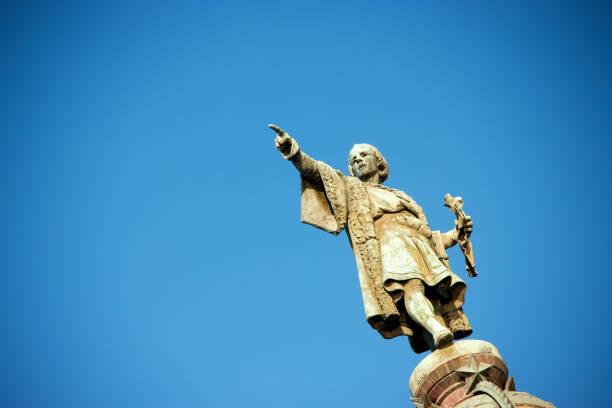
The Columbus Myth: Reexamining the Narrative of Discovery and Its Indigenous Counterparts
For centuries, schoolchildren across the Western world have memorized a tidy verse: “In fourteen hundred and ninety-two, Columbus sailed the ocean blue.” The story that follows is equally neat—a...